Dr. Katerina Saltiki, Endocrinologist, MD, PhD

Thyroid Cancer
/
Thyroid Cancer: How Dangerous Is It?
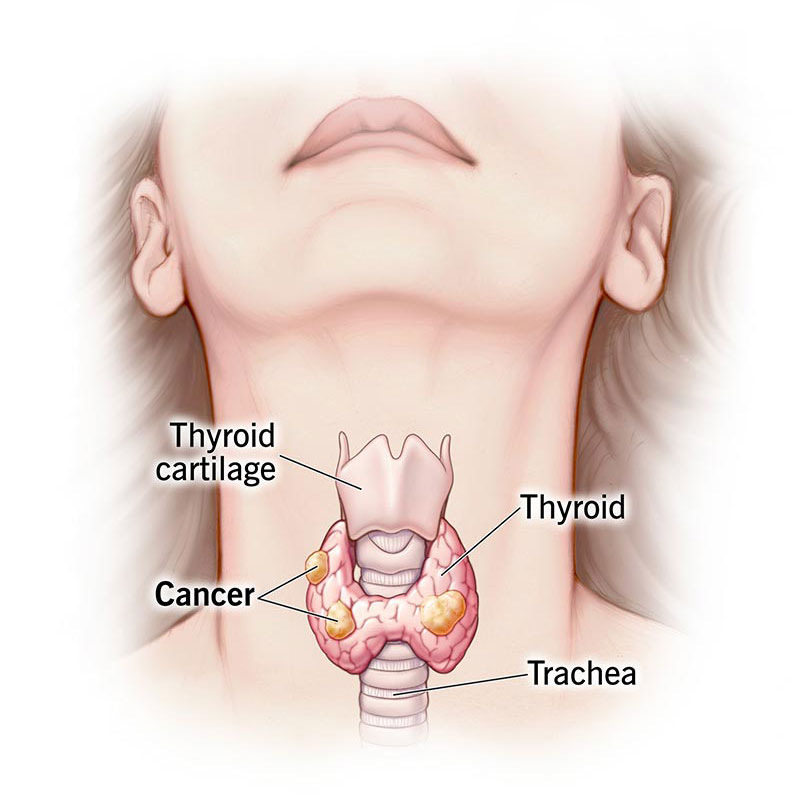
The thyroid gland is located low in the neck, in front of the larynx. It produces hormones such as thyroxine (T4) and triiodothyronine (T3), which are essential for growth, proper body function, and metabolism. Quite often, even when hormone production is normal, the thyroid gland develops nodules—either solitary or multiple. This condition is known as nodular goiter.
Thyroid cancer is the most common endocrine malignancy, and its incidence has increased in recent years. This is largely due to the widespread use of ultrasound imaging, leading to more frequent diagnoses, often involving microcarcinomas (≤1 cm), most commonly of the papillary type.
To assess whether a nodule is malignant, fine-needle aspiration (FNA) biopsy is used. There are four main types of thyroid cancer:
- Papillary carcinoma (80–85%): Frequently associated with cervical lymph node involvement. It has an excellent prognosis, with a 10-year survival rate of 95%, and is typically slow-growing. It is the most common type in patients previously exposed to external radiation, especially during childhood.
- Follicular carcinoma (6–10%): More frequent in iodine-deficient areas. It is treated similarly to papillary carcinoma, with a 10-year survival rate of about 80%.
- Anaplastic carcinoma (3%): A rare but very aggressive cancer that is almost always fatal. It may arise from pre-existing papillary or follicular carcinoma.
- Medullary carcinoma (5%): Originates from C cells, which are neuroendocrine cells that produce the hormone calcitonin, a useful marker for both diagnosis and follow-up. About 25% of medullary carcinomas are hereditary (RET proto-oncogene mutation). Carriers can be identified through genetic testing and managed early.
Treatment of Thyroid Cancer
The primary treatment for papillary and follicular carcinomas is surgical removal of the tumor—usually through total thyroidectomy, with lymph node dissection when lymph node involvement is confirmed.
According to current guidelines, and depending on the stage of the disease, radioactive iodine (I-131) may be administered postoperatively to ablate residual thyroid tissue. Lifelong thyroxine (T4) replacement therapy is then initiated, with dosing tailored according to the risk of cancer recurrence.
In recent years, there has been a strategic shift in the management of thyroid cancer due to:
- a) Increasing detection of low-risk carcinomas that may not require aggressive treatment
b) The development of new diagnostic tools, such as high-resolution ultrasound and thyroglobulin measurement—a highly sensitive marker for persistent or recurrent disease
c) The use of recombinant human TSH (rhTSH, Thyrogen) to stimulate residual thyroid cells prior to radioactive iodine treatment or during follow-up, avoiding the need to discontinue thyroxine therapy and sparing patients from the burdens of hypothyroidism. The use of rhTSH has improved the effectiveness, safety, and patient quality of life during both diagnostic and therapeutic procedures.
For the rare cases of metastatic or progressive disease, newly approved therapies have recently become available, contributing to disease stabilization. It is important to note that—with the exception of anaplastic carcinoma and some cases of medullary carcinoma—most forms of thyroid cancer, even when persistent or metastatic, tend to progress very slowly.
In fact, in 80–90% of patients, thyroid cancer does not significantly affect life expectancy.